Best Motorcycle Car Lifts for Home Mechanics in 2026?
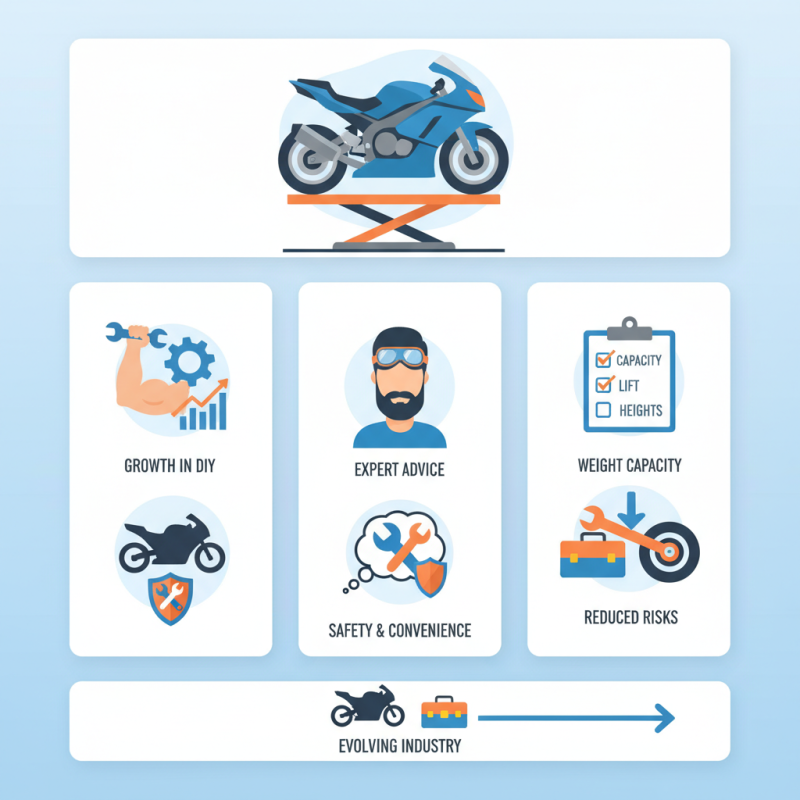
In recent years, the motorcycle maintenance industry has seen rapid growth. According to a recent report from the Motorcycle Industry Council, over 8 million motorcycles were sold in 2022, indicating a strong demand for efficient home mechanics. As more enthusiasts take on DIY projects, the need for reliable tools like the Motorcycle Car Lift has become crucial.
Expert Ben Wright, a renowned automotive technician, stated, “A good Motorcycle Car Lift can make all the difference for home mechanics.” His insight sheds light on the importance of choosing the right lift for safety and convenience. With various models available, the challenge lies in selecting one that fits your specific needs.
Many lift options may promise ease of use, but not all deliver in terms of stability. It’s essential to assess weight capacities and lifting heights before making a decision. Refining one’s choice in Motorcycle Car Lifts can reduce potential risks during repairs and maintenance. As the industry evolves, informed choices will shape the DIY mechanic landscape.
Top Considerations When Choosing a Motorcycle Car Lift for Home Use
When choosing a motorcycle car lift for home use, consider the
weight capacity. Most bikes weigh between
300 to 800 pounds. A lift must handle this weight comfortably.
Check the lift’s stability too; a wobbly lift can lead to accidents.
Next, think about the height adjustment features. A good lift
should provide various height options. This allows easy access to different parts of the bike. If the lift is
too low or too high, it complicates your work.
Ease of use is another important factor. Look for lifts with user-friendly designs.
Lifting and lowering should be smooth without excessive effort. Some lifts have a complex setup that can be
frustrating. Reflect on your own skill level. Choose a lift that aligns with your
comfort and confidence in use.
Types of Motorcycle Lifts: Hydraulic, Pneumatic, and Electric Options
When it comes to motorcycle lifts, three main types stand out: hydraulic, pneumatic, and electric. Hydraulic lifts are popular due to their simple mechanics. They use a pump system to lift the bike. This makes them easy to operate. However, they can be heavy and may require regular maintenance.
Pneumatic lifts operate using air pressure. They are generally lighter and easier to move. A downside might be the need for an air compressor. This could add extra cost and space in your workshop. Electric lifts, on the other hand, are user-friendly. They provide quick lifting with the push of a button. Yet, electric models may require a power source nearby.
**Tips:** Consider your workspace before purchasing a lift. Measure the area to ensure it fits well. Also, think about weight capacity. Not all lifts can handle heavier models. Reflect on how often you will use the lift. If infrequently, a hydraulic lift may suit you. If you work on multiple bikes regularly, an electric lift could be better. Don't rush your decision.
Best Motorcycle Car Lifts for Home Mechanics in 2026
This chart presents the popularity ratings of different types of motorcycle lifts for home mechanics in 2026. Hydraulic lifts are rated at 8, pneumatic lifts at 6, and electric lifts at 9, indicating a strong preference for electric lifts among home mechanics.
Key Features to Look for in a Motorcycle Lift for Home Mechanics
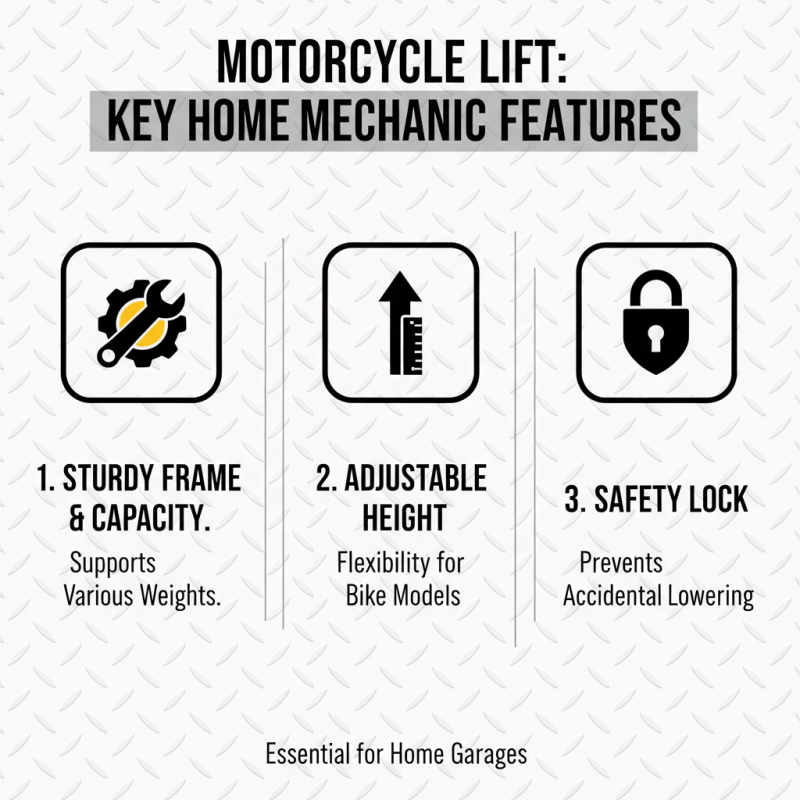
When choosing a motorcycle lift for home mechanics, it’s essential to focus on key features. A sturdy frame is vital. Lifts must support various motorcycle weights, ensuring stability. Look for adjustable heights. This offers flexibility when working on different bike models. Thankfully, some lifts feature a safety lock. This prevents accidental lowering during repairs.
Consider the lift's mobility. Wheels make transportation easier within your workspace. However, ensure they are durable; cheap wheels wear out quickly. A non-slip surface is also important. This means you can securely place your bike without fear of slipping. Think about storage space, too. Some lifts fold up nicely, while others take up extra room.
Reflect on your personal needs. A lift should fit your workspace and usage frequency. If it’s a one-time project, investing heavily might not make sense. However, for regular maintenance, it’s worth considering additional features. Remember that each mechanic has different preferences. Your choice might not suit another's style. Prioritize what matters most for your projects.
Safety Tips for Using Motorcycle Lifts at Home: Best Practices
Using motorcycle lifts at home can be rewarding but comes with risks. Safety should always be your top priority. When lifting a motorcycle, ensure the lift is on a flat, stable surface. Uneven ground can lead to accidents. Always check the weight limit of the lift. Exceeding this limit can result in catastrophic failure.
Before getting started, ensure you have the right tools nearby. Tools should be organized and easy to reach. Avoid clutter around the lift area. This helps prevent trips and distractions. Safety gear is also important. Wear gloves, goggles, and sturdy shoes. These items can provide protection in case of an unexpected slip.
When the motorcycle is lifted, never lean over it. This minimizes risk if the bike were to fall. Before starting work, double-check that the lift is secure. Small mistakes can lead to big problems. Don't rush the process. Take time to do it right. Your safety depends on this.
Comparing the Best Motorcycle Car Lifts Available in 2026 Market
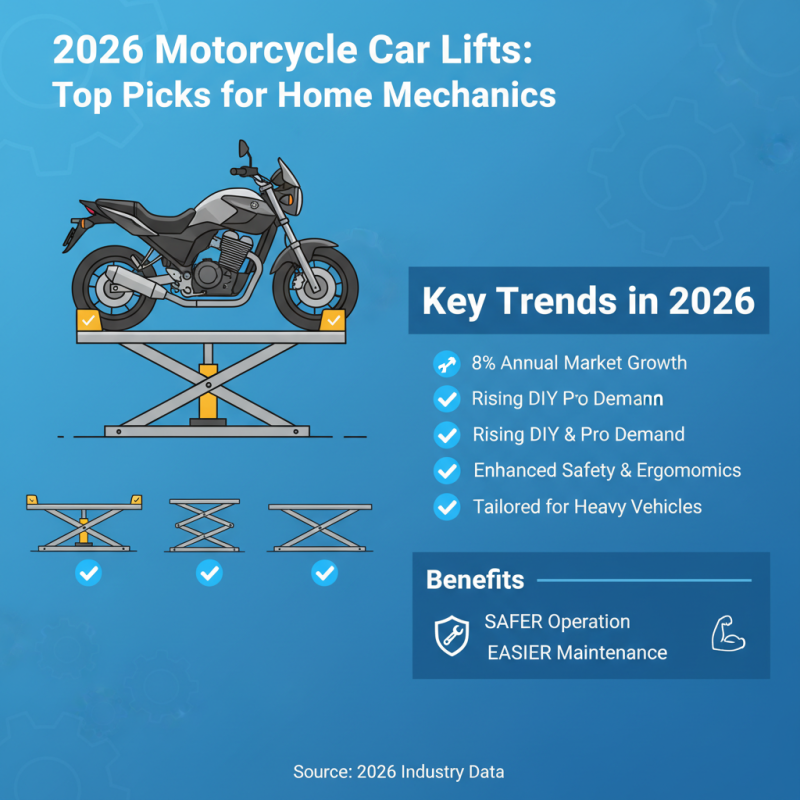
The year 2026 brings exciting options for motorcycle car lifts tailored to home mechanics. According to recent industry data, the motorcycle lift market is projected to grow by 8% annually. This growth reflects a rising demand among DIY enthusiasts and professional mechanics alike. Lifts designed for motorcycles provide better safety and ergonomics, which are crucial for working on heavy vehicles.
In analyzing the available options, several key features stand out. A lift's weight capacity is paramount; many models support 1,000 pounds or more. This ensures they can handle a wide range of motorcycles. The height adjustment feature also holds importance. Lifts that can raise a bike to at least 30 inches allow for easier access to the undercarriage. However, some users report challenges with stability. Ironically, a lightweight design can compromise sturdiness during heavy lifting.
A notable trend is the rise of hydraulic lifts. They require less effort to operate, making them accessible for all users. Yet, hydraulic systems can fail if not maintained properly. It's essential for users to review maintenance guidelines. Additionally, portability is often overemphasized; lifting capacity and stability should come first. Many home mechanics overlook their workshop size, potentially leading to space constraints with larger models. Choices made in 2026 should carefully balance functionality and safety.