How to Choose a Mid-Rise Scissor Lift in 2026?
Choosing a Mid-Rise Scissor Lift in 2026 requires more than comparing lifting capacity and purchase prices. Workshops now face tighter floor plans, heavier electric vehicles, and rising expectations for technician safety. Grand View Research’s Automotive Lifts Market report identifies continued growth in vehicle service equipment, driven by fleet expansion, maintenance demand, and workshop modernization. Yet market growth does not make every lift suitable.
Fit matters.
A practical choice begins with bay measurements, vehicle weight, lifting points, and daily workload. The Automotive Lift Institute’s certification guidance remains a valuable reference for buyers. R.W. “Bob” O’Gorman, a recognized ALI safety expert, has emphasized, “Look for the ALI Certified/Validated by label.” That advice sounds simple, but it is often missed when buyers focus only on discounts or lifting height.
A reliable Mid-Rise Scissor Lift should provide stable contact, clear access, controlled descent, and documented maintenance support. Check the platform width beside a compact sedan. Then imagine a long-wheelbase electric vehicle resting above it. The difference can expose a poor specification quickly.
Certification is important. So are usable details.
This guide will examine lifting capacity, minimum and maximum height, runway design, hydraulic systems, lock mechanisms, installation space, and service availability. It will also compare portable and fixed models for independent garages, tire centers, and professional workshops. Some recommendations may remain conditional. Real workshops are rarely perfect, and manufacturer claims deserve careful verification. A lift that performs well in a brochure may feel restrictive beside a crowded tool cabinet. Reliable selection comes from matching published data with daily working experience.
Mid-Rise Scissor Lift Basics and Common Workshop Applications
How to Choose a Mid-Rise Scissor Lift in 2026?
Mid-Rise Scissor Lift Basics and Common Workshop Applications
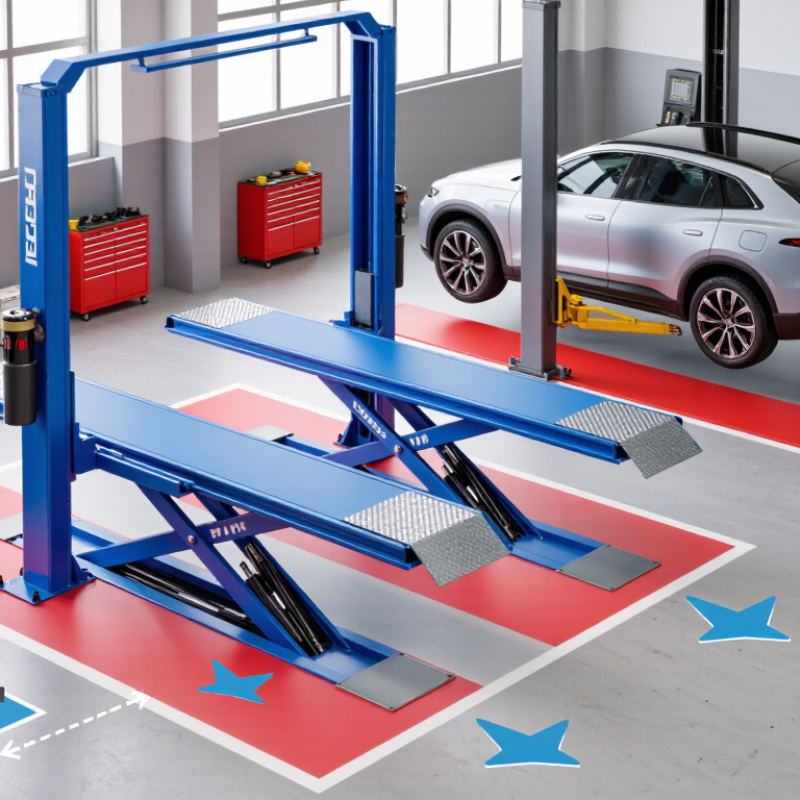
A mid-rise scissor lift raises a vehicle enough for comfortable wheel and underbody work. Most models provide approximately 1.0 to 1.5 metres of lifting height. Unlike full-rise equipment, they occupy less ceiling space and suit smaller workshops. The platform width, closed height, and rated capacity need careful checking. Clear access matters. A lift should support the vehicle’s actual weight, not only its advertised average.
Common applications include tyre replacement, brake servicing, suspension inspections, exhaust repairs, and underbody cleaning. Technicians often appreciate the open working area around the wheels. Some designs include removable platforms or sliding plates for better access. In 2026, heavier electric vehicles make capacity and pad positioning especially important. Battery cases can sit low, so lifting points must match the vehicle maker’s service information.
A reliable choice also depends on floor strength, power supply, locking systems, and emergency lowering controls. I have seen workshops focus on maximum height and overlook platform clearance. That creates awkward work positions.
Not ideal.
Check the lift during a real service task, if possible. Measure doorways, turning space, and storage areas before ordering. Regular inspections, clean hydraulic components, and trained operation support safer daily use. Even experienced technicians can rush setup, especially during busy tyre seasons. A written pre-use check helps expose that habit.
Assessing Vehicle Weight, Dimensions, and Required Lifting Height
Choosing a mid-rise scissor lift starts with the vehicle, not the advertised capacity. Record the vehicle’s gross weight, axle loads, wheelbase, and center of gravity. A loaded service van may weigh far more than its empty specification. Leave a sensible margin above the maximum working load. More capacity is not automatically better.
Measure the vehicle’s length, width, track, and lowest contact points. Check whether the lift platforms support the tires or the chassis. Tire placement matters. Uneven loading can shift the center of gravity and reduce stability. In a workshop, I also measure door width, turning space, and floor flatness before selecting equipment. A lift that fits the bay may still block another work area.
Required lifting height depends on the repair task. Wheel service needs less height than underbody inspection or exhaust work. Measure from the floor to the vehicle’s highest working point, then check ceiling clearance, lighting, and overhead doors. Include the height of adapters or rubber blocks. Small details cause expensive mistakes. I once underestimated a van’s roof clearance by a few centimeters; the layout had to be changed. That was avoidable.
Review the lift’s rated capacity, minimum height, maximum height, locking system, and platform dimensions. Confirm that the floor can support the concentrated loads. Follow the installation manual and applicable inspection requirements. Do not rely on appearance or price alone. A careful measurement sheet is more reliable than a quick visual judgment.
How to Choose a Mid-Rise Scissor Lift in 2026? — Assessing Vehicle Weight, Dimensions, and Required Lifting Height
| Vehicle Category |
Typical Curb Weight |
Typical Overall Length |
Typical Overall Width |
Typical Wheelbase |
Recommended Lift Capacity |
Recommended Platform Length |
Recommended Platform Width |
Minimum Lift Height |
Recommended Working Height |
Key Selection Consideration |
| Small Hatchback |
900–1,250 kg |
3,600–4,100 mm |
1,600–1,750 mm |
2,350–2,550 mm |
≥ 2,700 kg |
1,400–1,600 mm |
450–550 mm per platform |
100–130 mm |
1,200–1,400 mm |
Confirm that the platform contact points remain inside the vehicle manufacturer’s approved lifting areas. |
| Compact Sedan |
1,200–1,550 kg |
4,400–4,700 mm |
1,750–1,820 mm |
2,600–2,750 mm |
≥ 3,000 kg |
1,600–1,800 mm |
500–600 mm per platform |
100–140 mm |
1,300–1,500 mm |
Adequate platform length and adjustable rubber blocks are important for balanced underbody support. |
| Midsize Sedan |
1,450–1,850 kg |
4,700–4,950 mm |
1,800–1,880 mm |
2,700–2,850 mm |
≥ 3,500 kg |
1,800–2,000 mm |
550–650 mm per platform |
110–150 mm |
1,350–1,550 mm |
Check the lift’s rated capacity at the intended lifting height, not only its maximum rated capacity. |
| Compact SUV or Crossover |
1,400–1,950 kg |
4,300–4,650 mm |
1,800–1,900 mm |
2,600–2,750 mm |
≥ 3,500 kg |
1,700–1,950 mm |
550–650 mm per platform |
120–160 mm |
1,350–1,600 mm |
Allow for higher ground clearance, wider tires, and possible asymmetrical load distribution. |
| Midsize SUV |
1,800–2,400 kg |
4,700–5,000 mm |
1,850–1,950 mm |
2,750–2,950 mm |
≥ 4,000 kg |
1,900–2,100 mm |
600–700 mm per platform |
130–170 mm |
1,400–1,650 mm |
Use a lift with sufficient platform width and a verified wheelbase range for stable four-point support. |
| Large SUV or Pickup |
2,200–3,000 kg |
4,900–5,600 mm |
1,900–2,050 mm |
2,900–3,400 mm |
≥ 4,500 kg |
2,000–2,300 mm |
650–750 mm per platform |
140–190 mm |
1,400–1,700 mm |
Verify the lift’s front-to-rear load distribution limits, platform length, and clearance around mirrors and bodywork. |
| Electric Vehicle |
1,500–2,800 kg |
4,200–5,100 mm |
1,750–2,000 mm |
2,600–3,100 mm |
≥ vehicle weight × 1.25 |
1,800–2,200 mm |
550–750 mm per platform |
120–180 mm |
1,300–1,600 mm |
Use only approved lifting points, protect the battery enclosure, and account for a low center of gravity and high axle loads. |
| Light Commercial Van |
2,000–3,500 kg |
4,800–5,500 mm |
1,900–2,050 mm |
2,900–3,500 mm |
≥ 5,000 kg |
2,200–2,500 mm |
700–800 mm per platform |
150–220 mm |
1,400–1,700 mm |
Many mid-rise scissor lifts are not suitable for vans; confirm the vehicle class, axle loading, and platform dimensions first. |
Selection rule: Choose a lift with a rated capacity at least 25% above the vehicle’s maximum operating weight, including passengers, cargo, tools, and removable equipment. Always verify the manufacturer’s lifting points, axle-load limits, platform dimensions, locking system, installation requirements, and local safety regulations before use.
Comparing Lift Capacity, Platform Size, and Safety Features
How to Choose a Mid-Rise Scissor Lift in 2026?
Lift capacity should match real workshop vehicles, not only advertised maximums. The U.S. EPA’s Automotive Trends Report places average new-vehicle weight near 4,200 pounds. Electric SUVs can weigh more. A 6,000-pound lift may handle many cars, but it leaves less working margin. I prefer at least 7,000 to 9,000 pounds for mixed service work. Never lift beyond the rated load. Check axle loading too, because a heavy front end can stress the platforms unevenly. The number looks simple. The judgment is not.
Platform size affects stability and access. Narrow platforms may suit compact cars, yet wider platforms better support larger electric vehicles. Measure wheelbase, tire width, and battery clearance before buying. A platform with textured rubber blocks can reduce sliding, especially on dusty floors. The lift should also include mechanical locks, visible lock engagement, emergency lowering, and protected hydraulic lines. ANSI/ALI ALCTV safety requirements emphasize rated load information, stable support, and reliable controls. These features matter more than a polished control panel.
Tips: Ask for the complete load chart, not only the headline capacity. Test lock engagement at working height. Leave space around the vehicle doors. EPA data can guide weight estimates, but your service records are more accurate. I once trusted brochure dimensions too quickly; the platforms fit the vehicle, but not the technician’s reach. Check both.
How to Choose a Mid-Rise Scissor Lift in 2026?
Comparing lift capacity, platform size, and essential safety features
| Lift Category |
Typical Rated Capacity |
Typical Platform Size |
Safety Features to Verify |
| Compact |
2,700 kg |
1.2 × 2.0 m |
Guardrails, toe boards, emergency lowering, overload protection, mechanical safety locks |
| Standard |
3,200 kg |
1.5 × 2.0 m |
Guardrails, toe boards, emergency lowering, overload protection, mechanical safety locks |
| Heavy-Duty |
4,000 kg |
1.8 × 2.0 m |
Guardrails, toe boards, emergency lowering, overload protection, mechanical safety locks |
These representative specifications reflect commonly published mid-rise scissor-lift ranges. Select capacity according to the combined weight of people, tools, and materials, while ensuring that the platform dimensions fit the intended work area. Safety devices should be verified against applicable local regulations and the manufacturer’s technical documentation.
Selecting a Reliable 2026 Model for Cost, Maintenance, and Compliance
How to Choose a Mid-Rise Scissor Lift in 2026?
Selecting a reliable mid-rise scissor lift requires more than comparing purchase prices. A 2025 IPAF Global Safety Report recorded 100 MEWP-related fatalities across 17 countries during 2024. Falls from platforms remained a major concern. Choose a model with stable guardrails, emergency lowering, overload sensing, and clearly documented load limits. Check whether the platform height suits your actual work. Extra height often increases cost without improving productivity.
Maintenance affects the real ownership cost. Ask for service intervals, battery replacement estimates, spare-parts availability, and inspection records. Electric models may reduce indoor emissions and routine servicing, but battery condition matters greatly. A weak battery can turn a full shift into several interruptions. The U.S. Bureau of Labor Statistics continues to identify falls as a leading source of fatal workplace injuries, so compliance should guide the purchase. Verify operator training, daily checks, periodic examinations, and alignment with applicable OSHA or local standards.
Tips: Request a three-year total-cost estimate, not only a quotation. Compare energy use, tires, batteries, inspections, and downtime. Test the lift on your actual floor, including ramps and uneven transitions. No checklist is perfect. I would also record defects with photographs and dates; small hydraulic leaks are easy to ignore, until they are expensive. Select documentation that is readable, current, and traceable to the machine’s serial number.