Leave Your Message

How to Choose a Car Washing Scissor Lift?

Choosing the right Car Washing Scissor Lift requires more than comparing lifting capacity and price. The equipment must suit your washing bay, vehicle sizes, drainage system, and daily workload. A compact lift may fit a narrow workshop, while a wider platform can provide better stability for vans and larger vehicles. Measure twice. Fit matters.

Pay close attention to rated capacity, platform length, minimum height, and maximum rise. Safety locks, anti-slip surfaces, emergency lowering systems, and dependable hydraulic components deserve careful inspection. In wet environments, corrosion protection is not optional. Rust wins. Check whether the frame, cylinders, hoses, and control cabinet can withstand constant water, detergents, and mud. Reliable manufacturers should provide technical documents, installation guidance, maintenance instructions, and responsive service support.

A professional evaluation should also consider installation quality and operator training. An incorrectly positioned lift can create uneven loading, drainage problems, or unsafe working conditions. Ask for verified test information and confirm that the product meets applicable local safety requirements. Do not rely on attractive photographs alone. They hide details.

There is no perfect lift for every business. A model that performs well in a busy detailing center may be excessive for a small garage. Some buyers focus heavily on price and regret weak after-sales support later. That lesson is easy to overlook. Compare the complete ownership cost, including delivery, installation, inspections, repairs, and expected service life. This guide explains the practical checks that can make your final choice safer, more efficient, and easier to defend.

How to Choose a Car Washing Scissor Lift?

Define Your Car Washing Scissor Lift Requirements

Choosing a car washing scissor lift starts with defining the working conditions, not comparing appearance or price. Measure vehicle weight, wheelbase, lifting points, platform width, and available ceiling height. Include water, tools, and accessories in the load calculation. A small oversight can create a serious capacity problem.

The U.S. Environmental Protection Agency’s WaterSense guidance reports that commercial washing can use about 40 gallons of water per vehicle. That exposure demands sealed controls, corrosion-resistant surfaces, reliable drainage, and protected hydraulic components. Specify the lift’s rated load, lifting height, cycle frequency, and usable platform length. Check whether its design supports the vehicle types handled daily. Passenger cars and larger utility vehicles may require different clearances.

Safety details deserve equal attention. Select equipment tested against applicable automotive lift requirements, such as ANSI/ALI safety provisions, and verify emergency lowering, mechanical locks, anti-slip surfaces, and visible load markings. Confirm the floor can support concentrated loads. Ask for inspection records, maintenance intervals, and replacement-part availability. Documentation matters.

Do not overlook workflow.

A lift that raises a vehicle well but drains poorly can slow every wash. I would also test hose movement, operator visibility, and water overspray before purchase. My earlier assumption was that higher lifting capacity always meant better value. It did not. Excess capacity may increase cost, height, and installation demands without improving daily productivity. Define the real workload first, then match the lift to it.

Compare Lift Types, Capacity, and Platform Dimensions

How to Choose a Car Washing Scissor Lift?

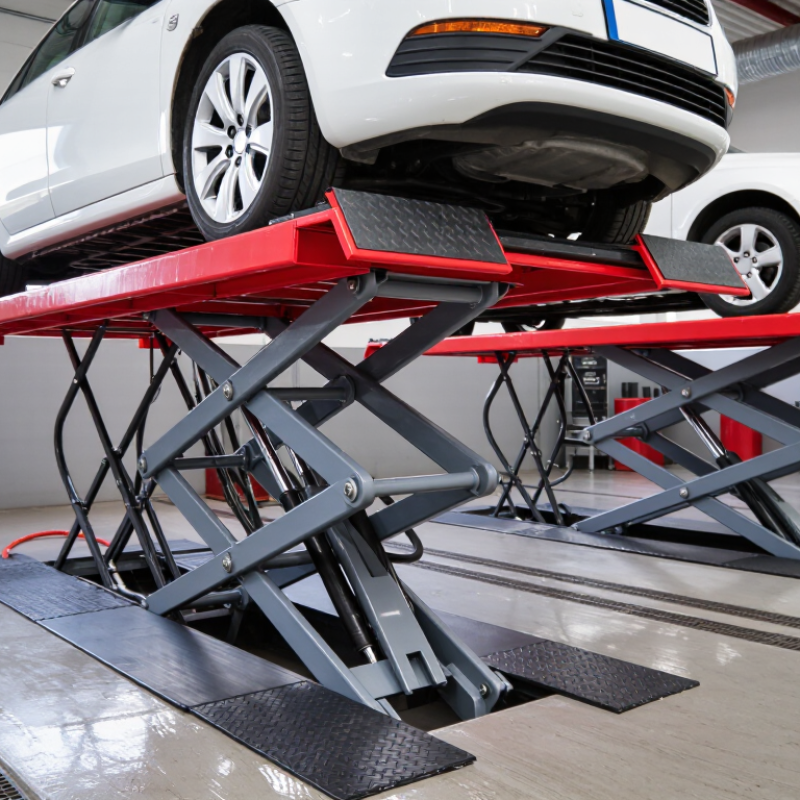
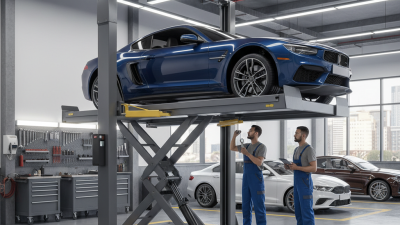
When choosing a car washing scissor lift, compare the lifting structure with your work area. A single-scissor lift suits compact bays and routine passenger-car cleaning. A double-scissor design offers greater height and improved stability for heavier vehicles. Surface-mounted models simplify installation, while recessed lifts create a flatter floor. However, recessed installation may require more planning and drainage work. I once underestimated this detail. The lift fit the bay, but cleaning around its edges became inconvenient.

Capacity must match real vehicle weight, not only the advertised maximum. Check axle loading, weight distribution, and the safety margin recommended by the manufacturer. A lift rated for 3,000 kilograms may still perform poorly if the load is uneven. Platform dimensions matter just as much. Measure tire contact points, wheelbase, door clearance, and approach width. Narrow platforms can make technicians feel unsafe. Oversized platforms may restrict movement around the vehicle. Include space for water hoses and floor drainage.

Tips: Measure the bay before comparing models. Confirm closed height, raised height, and platform width. Ask for load-test records and maintenance guidance. Check whether exposed parts resist moisture and cleaning chemicals. Choose adjustable wheel stops when vehicles vary in size. Do not rely on photographs alone. A simple cardboard layout can reveal clearance problems before installation. Perfect measurements are rare, so leave practical working space.

How to Choose a Car Washing Scissor Lift?

Compare lift types, rated capacity, and platform dimensions before selecting equipment for vehicle washing operations.

Typical Platform Specifications

Lift Type Rated Capacity Typical Platform Size Best Use
Portable Low-Rise 2,800 kg 1.8 × 0.5 m Quick washing and underbody access
Mobile Mid-Rise 3,000 kg 1.8 × 0.6 m Detailing, tire service, and general maintenance
Surface-Mounted Full-Rise 4,000 kg 4.5 × 0.65 m Frequent commercial washing and service work
In-Ground Scissor Lift 4,000 kg 5.0 × 0.7 m Permanent wash bays and maximum floor clearance

The values shown are representative specifications commonly found across automotive scissor-lift categories. Always confirm the lift’s certified capacity, platform dimensions, vehicle wheelbase compatibility, drainage requirements, and safety standards before purchase.

Evaluate Safety Features and Vehicle Protection

When choosing a car washing scissor lift, safety should guide every specification. Check the rated load against the heaviest vehicle you service, not the average one. The platform should rise evenly and remain stable under uneven weight. Mechanical safety locks are essential if hydraulic pressure drops. Confirm that emergency lowering controls are accessible and clearly marked. Test the lift before use.

Vehicle protection requires equal attention. Look for wide, non-slip platforms with rounded edges and durable rubber contact pads. These surfaces should support the tires without cutting sidewalls or scratching wheels. Check the minimum height, maximum height, and platform spacing carefully. A small clearance error can damage low bumpers, exhaust parts, or underbody panels. Drainage channels should remove water quickly, reducing corrosion around the lift structure.

Inspect the hoses, cylinders, welds, and locking points regularly. Soap residue can hide wear. It is tempting to trust a lift after installation, but daily washing creates vibration, moisture, and chemical exposure. A careful inspection can still miss a developing fault. That is why service records, operator training, and clear load markings matter. Keep wheel chocks available when required, and never rely on hydraulic pressure alone. Practical safety is sometimes inconvenient. It is still cheaper than repairing a customer’s vehicle.

Check Installation, Maintenance, and Operating Conditions

How to Choose a Car Washing Scissor Lift?

Installation determines whether a car washing scissor lift remains stable after months of wet work. Check the manufacturer’s load rating against the vehicle’s actual weight, including tools and water. The concrete floor should be level, strong, and free from hidden cracks. Anchors need correct spacing and proper tightening. Drainage matters too. Standing water can reach cylinders, sensors, and electrical connections. A qualified installer should verify clearances, emergency lowering, and local site requirements. I have seen an apparently solid bay fail because the ramp blocked the drain.

Tips: Mark the wheel positions before installation. Leave enough room for doors, hoses, and technician movement. Test the lift without a vehicle, then with a light vehicle. Record unusual sounds or uneven movement.

Maintenance should match the harsh washing environment. Inspect hydraulic hoses, fittings, locks, cables, and anchor bolts at scheduled intervals. Clean mud from the platforms before it hardens. Use only compatible fluids and replacement parts. Chemical overspray may damage seals faster than expected. The operator should confirm that the vehicle is centered and the lifting points are suitable. Never rely on pressure alone to hold a raised vehicle; engage the mechanical locks. Cold temperatures, poor lighting, slippery floors, and overloaded platforms change operating conditions. Even experienced technicians can rush a cycle. That mistake deserves attention. Keep hands clear, control nearby spray, and stop immediately when movement becomes uneven.

Select a Reliable Lift Based on Cost and Long-Term Value

How to Choose a Car Washing Scissor Lift?

Select a Reliable Lift Based on Cost and Long-Term Value

A car-washing scissor lift faces water, detergent, grit, and repeated loading. Price matters, but ownership cost matters more. Grand View Research estimates the global automotive lift market will continue growing through 2030, reflecting rising demand for efficient vehicle servicing equipment. That growth does not make every low-cost lift a smart purchase.

Check the rated capacity, platform length, lifting height, and minimum floor strength. The Automotive Lift Institute recommends using certified equipment and following documented inspection procedures. For washing bays, prioritize corrosion-resistant steel, protected hydraulic components, drainage openings, and visible mechanical locks. A lift that reaches full height quickly may still disappoint if seals fail after months of chemical exposure. Ask for maintenance intervals and replacement-part pricing before signing anything.

Calculate electricity, lubrication, inspections, repairs, and downtime over five years. A slightly higher purchase price can be reasonable when the lift reduces service interruptions. The U.S. Bureau of Labor Statistics reported 5,486 fatal work injuries in 2022, so safety controls deserve more than a checkbox. Operators need clear controls, emergency lowering, stable platforms, and practical training. I would not trust impressive specifications alone. Real performance depends on installation quality, cleaning habits, and daily inspections. That part is easy to underestimate. A written maintenance log may feel excessive, yet it often exposes small leaks before they become expensive failures.

How to Choose a Car Washing Scissor Lift? - Select a Reliable Lift Based on Cost and Long-Term Value

Evaluation Dimension Typical Specification or Cost Range Why It Matters in a Car Wash Long-Term Value Indicator Recommended Selection Guidance
Rated Lifting Capacity 3,000–6,000 kg for passenger vehicles, SUVs, vans, and light commercial vehicles The lift must safely support the heaviest vehicle that will routinely enter the wash bay, including passengers and equipment. A suitable capacity rating reduces overload risk and limits unnecessary structural stress.
Maximum Lifting Height 1.2–2.0 m for underbody washing, detailing, inspection, and maintenance access Higher travel provides better access but may require greater ceiling clearance and deeper structural planning. Choose usable height rather than the highest advertised height to avoid paying for unused capacity. Confirm the required working height, ceiling clearance, vehicle dimensions, and technician access before purchase.
Platform Length and Width Platform length commonly 4.5–6.0 m; width commonly 2.0–2.5 m Adequate platform dimensions improve vehicle positioning and reduce the risk of wheels extending beyond the support area. A properly sized platform accommodates more vehicle types and reduces operational interruptions. Match platform dimensions to the longest wheelbase, widest track, and tire position of the vehicles being serviced.
Purchase Price Approximately USD 8,000–25,000 for a commercial-grade scissor lift, excluding site work and taxes Initial price affects capital expenditure, but the lowest purchase price may not represent the lowest operating cost. Compare the complete installed cost, expected service life, spare parts availability, and downtime risk. Avoid selecting solely by purchase price; evaluate cost per operating year.
Installation and Site Preparation Approximately USD 2,000–10,000, depending on concrete work, drainage, electrical supply, and access conditions Wash bays require proper drainage, water management, electrical protection, and a suitable foundation. Correct installation reduces alignment problems, water damage, and future structural repairs. Obtain a site-specific installation quotation and verify slab thickness, strength, drainage, and power requirements.
Drive-Over and Flush-Mount Design Flush-mounted systems generally require more civil work than surface-mounted systems A flush platform can improve vehicle access, bay appearance, and workflow, while a surface-mounted design is usually faster to install. Consider total project cost, cleaning access, drainage performance, and future replacement difficulty. Choose flush mounting for permanent new construction; consider surface mounting where installation speed and flexibility are priorities.
Corrosion Protection Hot-dip galvanizing, corrosion-resistant coatings, sealed components, and protected hydraulic or electrical parts Detergents, recycled water, road salt, and constant humidity can accelerate corrosion in wash environments. Better corrosion resistance extends service life and lowers the frequency of structural and electrical repairs.
Hydraulic System and Leakage Control Hydraulic cylinders with mechanical safety locks, hose-burst protection, and accessible inspection points Hydraulic leaks can create slip hazards, contaminate drainage systems, and interrupt vehicle processing. Reliable locking and easy inspection improve safety and reduce unplanned downtime. Verify automatic safety locks, emergency lowering procedures, leak detection, and the availability of replacement seals and hoses.
Safety Features Mechanical locks, anti-skid surfaces, emergency stop controls, overload protection, and wheel restraints where required Vehicle movement, wet surfaces, and elevated loads create significant operational hazards. Effective safety systems help protect workers, vehicles, and the lift structure while supporting regulatory compliance. Require documented safety testing, visible controls, maintenance access, and clear operating instructions.
Operating Cycle and Throughput Typical lifting and lowering cycle: approximately 45–120 seconds, depending on lift design and load Cycle time affects the number of vehicles that can be processed during busy periods. Faster cycles can improve revenue potential, but excessive speed should not compromise smooth movement or safety. Calculate the required cycles per hour and compare them with the lift's duty rating and cooling requirements.
Power Requirements Common commercial configurations use approximately 3–7.5 kW motors with site-specific voltage requirements Insufficient electrical capacity can cause nuisance trips, slow operation, or expensive electrical upgrades. Correct power matching improves reliability and avoids unnecessary energy and installation costs. Confirm voltage, phase, motor rating, control-panel protection, and local electrical-code requirements.
Routine Maintenance Daily cleaning and visual checks; scheduled lubrication, hydraulic inspection, lock testing, and electrical checks Removing chemical residue and debris is essential in a wet, detergent-rich environment. Consistent preventive maintenance reduces failures and extends the useful life of hydraulic, structural, and control components.
Estimated Annual Maintenance Cost Approximately 2%–5% of the lift purchase price under normal commercial use, excluding major repairs Maintenance cost depends on operating cycles, water chemistry, cleaning practices, and service availability. A slightly higher initial investment may be worthwhile if it reduces corrosion, consumables, and downtime. Use a five- to ten-year maintenance estimate rather than comparing only the first-year service cost.
Expected Service Life Approximately 10–20 years with correct installation, load management, corrosion control, and preventive maintenance Service life directly affects depreciation, replacement frequency, and long-term operating cost. Durable construction and replaceable components generally provide better value than a low-cost, difficult-to-repair design. Request load-cycle information, inspection requirements, structural documentation, and parts support before committing.
Downtime and Parts Availability Target critical replacement parts availability within several business days; actual lead times vary by region Every outage can reduce wash-bay capacity and delay customer vehicles. Local technical support and standardized components often have greater value than a small difference in purchase price. Confirm parts lists, service response times, technical documentation, and emergency support arrangements.
Total Cost of Ownership Purchase price + installation + energy + maintenance + repairs + downtime − residual value This provides a more accurate comparison between competing lift configurations. The best value is normally the option with predictable operating costs and minimal unplanned downtime.
Note: Cost and performance figures are typical planning ranges for commercial car-wash applications. Actual values depend on lifting capacity, platform design, local labor rates, site conditions, electrical standards, operating frequency, water chemistry, and maintenance practices.