Top Automatic Scissor Jack Manufacturers for Global Buyers
Global buyers are paying closer attention to compact lifting equipment for roadside repairs, workshops, and emergency vehicle service. OICA reported more than 93 million motor vehicles produced worldwide in 2023. This expanding vehicle base supports continuing demand for practical maintenance tools, including the Automatic Scissor Jack.
Vehicle age also matters. S&P Global Mobility reported that the average age of vehicles in the United States reached approximately 12.6 years in 2024. Older vehicles usually require more inspections, tire changes, and suspension work. A dependable jack can therefore become essential equipment, not merely an optional accessory.
This guide introduces leading Automatic Scissor Jack manufacturers for international buyers. It examines lifting capacity, motor performance, operating speed, steel construction, control design, and emergency-lowering functions. Real purchasing decisions also require attention to CE documentation, ISO 9001 systems, warranty terms, packaging strength, and replacement-part availability.
Small details matter.
A jack that lifts a sedan smoothly may struggle with a heavy sport utility vehicle. A weak controller can become inconvenient beside a dark roadside. Buyers should request load-testing evidence, factory photographs, inspection records, and sample units before placing large orders. Reports from Grand View Research and ResearchAndMarkets continue to highlight the importance of vehicle maintenance and aftermarket service worldwide, although their categories do not always isolate electric scissor jacks.
No supplier ranking is perfect. Product quality can vary between batches, and marketing language may hide limitations. This comparison therefore focuses on verifiable manufacturing experience, export capability, technical support, and consistent product specifications. The strongest manufacturers combine practical engineering with dependable after-sales service.
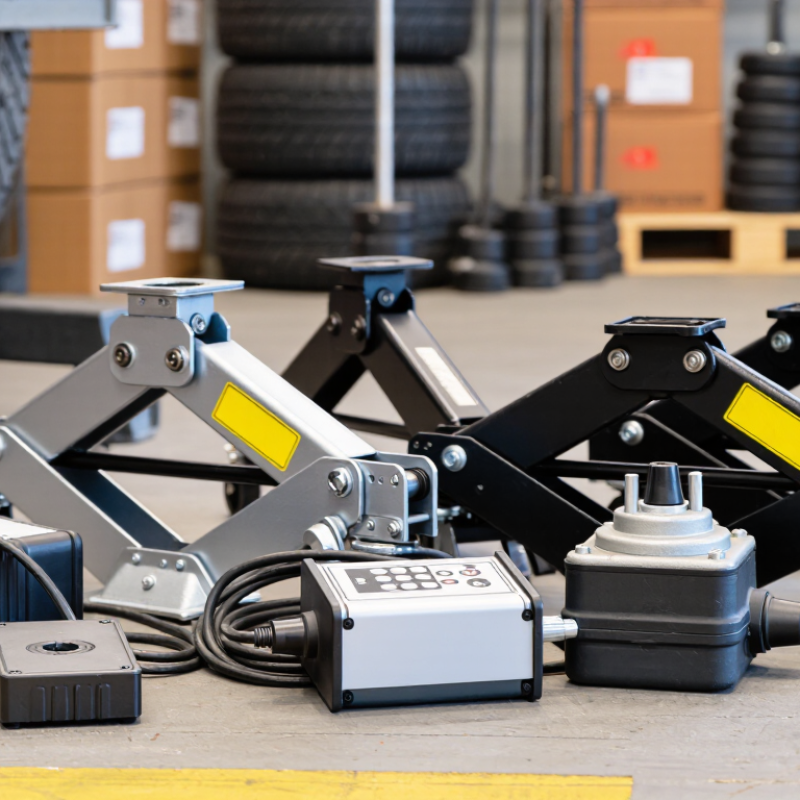
Automatic Scissor Jack Market Scope: 1–3 Ton Capacity and Global Demand
Top Automatic Scissor Jack Manufacturers for Global Buyers
Automatic scissor jacks are moving from occasional emergency tools to regular workshop equipment. The strongest demand sits in the 1–3 ton range, where compact cars, crossovers, and light vans dominate. Global buyers want lifting that is quick, stable, and simple to control beside a roadside. That need changes how manufacturers are judged. Motor testing matters. So do frame strength, screw durability, battery performance, and emergency lowering systems.
Experienced manufacturers usually validate capacity through repeated lift cycles, not one impressive demonstration. Buyers should request test records, clear load ratings, spare-part plans, and practical user manuals. A reliable design should operate on uneven pavement, tolerate dust, and remain controllable when temperatures change. Sealed switches and reinforced lifting arms can reduce failures during frequent use. Regional electrical requirements also deserve attention when selecting chargers and power systems.
No design is flawless. A jack may lift its rated load yet feel awkward on gravel or in a narrow garage. That detail is easy to miss. Field feedback from mechanics and fleet operators often reveals more than polished product images. Manufacturers serving global demand should study these complaints, revise weak components, and explain limitations honestly. For 1–3 ton buyers, dependable operation matters more than excessive lifting speed or decorative features.
Manufacturer Selection Criteria: ISO 9001, IATF 16949, CE, and UKCA Compliance
Top Automatic Scissor Jack Manufacturers for Global Buyers
When assessing automatic scissor jack manufacturers, check whether their quality system is certified to ISO 9001 and whether the certificate covers the relevant production site. Ask for its current scope and issuing body. A certificate alone does not prove that every jack meets your specifications. Review inspection records for weld quality, load testing, corrosion protection, and electrical components. Request sample reports tied to the exact model you plan to buy. Details matter.
IATF 16949 may be relevant when a supplier serves automotive supply chains, but confirm its scope and applicability to the facility making your product. CE and UKCA markings relate to applicable product requirements for the intended markets; they are not general quality awards. Ask for the supporting conformity documentation, risk assessments, and test evidence. Verify model numbers match across the jack, label, and paperwork. Small mismatches can slow a shipment—or expose a weak document-control process.
Tips: Check certificate validity directly with the issuer, and arrange an independent factory audit when practical. Watch a load test, inspect a finished unit, and ask how defects are recorded and corrected. A tidy audit folder is useful, but it is not the whole story. Sometimes, I would want one more sample before approving a supplier.
Top Automatic Scissor Jack Manufacturers by Load Rating, Stroke, and Speed
For global buyers, automatic scissor jack manufacturers should be compared by verified load rating, usable stroke, and lifting speed—not only advertised motor power. A 2024 Research and Markets outlook places the automotive jack market on a mid-single-digit growth path through 2030. That growth reflects rising demand for compact electric lifting tools, especially for roadside and workshop use.
Load rating comes first. A practical buyer should match the jack’s certified capacity with the vehicle’s actual lifting point, leaving a safety margin. Common passenger-vehicle models often fall between 1.5 and 3 tonnes, while heavier applications require stronger frames and larger motors. Stroke matters too. A 350–450 millimeter range may suit many sedans and crossovers, but the starting height must clear the vehicle’s underside. Measure it.
Speed is useful, but easy to exaggerate. Some automatic models claim full lifting in roughly 60–120 seconds, depending on load, battery voltage, and screw condition. The International Organization for Standardization’s ISO 12100 framework stresses risk reduction through design, guarding, and predictable operation. Buyers should request load-speed test curves, not isolated laboratory figures. I have found that “fast” units may slow sharply near maximum capacity. That detail deserves more attention. Manufacturers with traceable testing, clear overload protection, and serviceable components offer stronger evidence of reliability than polished specifications alone.
Global Buyer Comparison: Torque, 12V Power Draw, MOQ, Warranty, and Lead Time
When comparing automatic scissor jack manufacturers, ask for rated lifting torque alongside the vehicle load rating. Torque affects how steadily the screw lifts under resistance, but a larger figure alone does not prove better performance. Request test conditions, including load, lift height, and cycle count. A short video helps, though it cannot replace a written test report. Details matter.
For 12V models, compare current draw during startup and under load, not just the advertised average. A jack drawing 10 amps at rest is not the same as one drawing 10 amps while lifting. Ask whether cables, clamps, and a fuse are included, then confirm the required supply capacity. Small differences can matter in a cold car, where battery output may already be reduced. I would not rely on a single showroom demonstration.
MOQ, warranty, and lead time shape the real buying cost. Some factories accept a modest trial order but charge more per unit; others require larger batches for custom packaging. Get the MOQ in writing, and check whether warranty coverage includes the motor, switch, and screw mechanism. Ask how claims are handled and what evidence is needed. Lead time should separate production from shipping, with delays stated plainly. Estimates can slip; that is worth admitting before placing an order.
Supplier Verification: Load Testing, IP Ratings, Certifications, and After-Sales Support
For global buyers, supplier verification should begin with evidence, not attractive catalog photos. An automatic scissor jack must lift its stated load repeatedly, not only once. Ask for test records showing rated capacity, overload behavior, cycle count, and platform stability. During inspections, a clear video is useful, but an independent laboratory report is stronger. Request serial-number traceability for motors, switches, batteries, and lifting frames. Small gaps matter. A 2,000-kilogram claim means little without test conditions.
IP ratings need careful interpretation. IP54 may resist dust and splashing water, but it does not make a jack weatherproof. Confirm whether the rating covers the control box, hand controller, motor housing, or complete assembled unit. Certifications should match the destination market and product configuration. Check certificate numbers, issuing bodies, validity dates, and factory addresses. Some files look official but describe another model. That mistake is easy to miss. Also review emergency lowering, fuse access, and instructions in the buyer’s language. Our checklists are not perfect, so independent verification remains valuable.
Tips: Ask for a sample unit and record a practical test on a flat workshop floor. Measure lifting time, noise, battery endurance, and descent control. Repeat the test after several cycles. Confirm warranty coverage, spare-part availability, repair guidance, and response times. A supplier promising fast support should provide named contacts and written procedures. If basic evidence is refused, treat that refusal as data.