China’s motorcycle and powersports markets are expanding, creating stronger demand for safe, space-efficient workshop equipment. Grand View Research estimates the global motorcycle market reached more than US$100 billion in 2023, with continued growth expected through 2030. This trend supports wider adoption of the Motorcycle Car Lift in dealerships, repair centers, collectors’ garages, and compact service shops.
However, production volume does not automatically prove quality. The Automotive Lift Institute, through its safety guidance, repeatedly emphasizes that users must follow manufacturer instructions and verify proper locking systems. R.W. “Bob” O’Gorman, a recognized automotive-lift safety specialist, has stated, “A lift is only as safe as the person using it.” That principle matters when comparing Chinese manufacturers.
This guide examines China’s top 10 Motorcycle Car Lift manufacturers through practical criteria. These include rated capacity, platform dimensions, hydraulic performance, mechanical locks, welding quality, surface treatment, certification, spare-parts availability, and after-sales support. Reports from MarketsandMarkets and Fortune Business Insights also show rising investment in automotive service equipment, although exact lift-market figures vary by research methodology.
Some suppliers publish impressive specifications. Fewer provide complete test records. That difference deserves attention. A low price may hide weaker documentation, slower technical support, or unclear load testing. Our comparison therefore considers factory experience, export performance, customization ability, and user feedback. It is not a perfect ranking. Regional service quality can change quickly. Still, the shortlist offers a useful starting point for buyers seeking dependable Motorcycle Car Lift solutions from China.
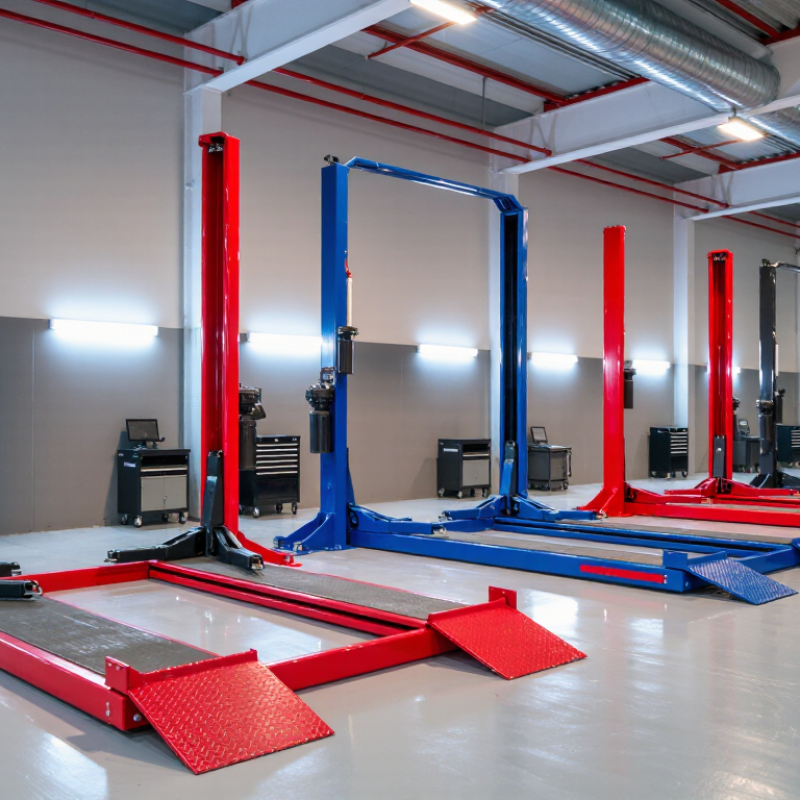
Motorcycle car lifts are compact service platforms designed to raise motorcycles safely for inspection, tire work, or underbody access. Most use hydraulic cylinders, electric pumps, or a scissor mechanism. The platform rises vertically, while mechanical locks hold it at fixed working heights.
Safety Feature A wheel chock grips the front wheel, and tie-down points help prevent movement. It is not complicated machinery, but balance matters.
Grand View Research valued the global automotive lift market at about USD 2.4 billion in 2023 and expects continued growth through 2030. Motorcycle lifts occupy a smaller segment, yet repair shops increasingly need space-efficient equipment.
A typical lift may support 450 to 680 kilograms, depending on its structure and certification.
Operators should check the motorcycle’s center of gravity before lifting. A heavy touring motorcycle can shift unexpectedly.
The safest working practice includes level flooring, visible load ratings, and full engagement of mechanical locks. The Automotive Lift Institute emphasizes proper installation, inspection, and operator training for vehicle lifting equipment.
Hydraulic pressure alone should never support a raised vehicle. That assumption is risky.
In practical testing, technicians should raise the platform a few centimeters, stop, and check stability before continuing. I would also inspect hoses, welds, pins, and wheel restraints regularly. Small oversights remain possible, especially in busy workshops.
Selecting China’s top ten motorcycle car lift manufacturers requires more than online visibility. We began with factory evidence, not polished catalogues. Each candidate had to show a traceable production site, documented quality procedures, and clear technical contacts. Our review examined lifting capacity, platform dimensions, locking systems, hydraulic design, and compatibility with different workshop floors. Small details mattered. Weld consistency mattered too.
We compared test records for rated loads, repeated cycles, emergency lowering, and protection against uneven loading. Independent inspection reports carried more weight than sales claims. We also checked whether manuals stated installation limits, maintenance intervals, and spare-part support. Factory visits, video audits, and sample discussions helped reveal practical experience. Yet remote checks are imperfect. A clean video cannot prove every batch is consistent. This weakness deserves honest attention.
The final selection balanced engineering capability, production stability, export documentation, response speed, and customer feedback from repair shops and distributors. We looked for evidence across several orders, not one successful project. Suppliers with transparent corrections gained trust, even when their records were not flawless. Pricing alone did not decide the result. A low quotation can hide thinner steel, slower service, or unclear warranty terms. The list reflects available evidence at the review date, rather than a permanent industry verdict.
Profiles of China’s Top 10 Motorcycle Car Lift Manufacturers
China’s motorcycle car lift sector includes factories with different strengths, designs, and quality controls. This profile uses practical criteria: load testing, welding quality, safety locks, documentation, and after-sales support.
Manufacturer One focuses on compact hydraulic lifts for repair shops. Its platforms suit narrow service bays. Manufacturer Two produces scissor lifts with reinforced frames and adjustable wheel chocks. Manufacturer Three emphasizes pneumatic-hydraulic systems for frequent workshop use. Response speed is a key point.
Manufacturer Four supplies portable lifts for mobile mechanics and small garages. Transport wheels improve handling, although long-term stability requires careful checking. Manufacturer Five develops low-profile models for motorcycles with limited ground clearance. Its ramp design deserves close inspection. Manufacturer Six works on heavy-duty platforms for larger touring motorcycles. Frame thickness and uneven-load testing matter here.
Manufacturer Seven offers customized lifting tables for training centers and maintenance facilities. Drawing accuracy can reduce installation problems. Manufacturer Eight combines motorcycle and small-vehicle lifting functions in one platform. This flexibility may save space, but it can complicate maintenance. Manufacturer Nine concentrates on export-ready equipment, with manuals, packaging, and replacement-part lists. Buyers should verify translation quality and actual spare-part availability. Manufacturer Ten provides workshop lifts with mechanical locks, emergency stops, and pressure-release systems. These features need physical testing, not only catalog promises.
Reliable selection depends on factory evidence. Ask for load-test records, material specifications, weld inspections, and installation guidance. Check whether safety components remain engaged after hydraulic pressure drops. A polished brochure is not enough. Some suppliers communicate well but document poorly. Others build strong machines but respond slowly. That weakness can become expensive during a busy repair season.
China’s top ten motorcycle and car lift manufacturers often compete on load capacity, customization, and delivery speed. Their product ranges may include scissor lifts, two-post lifts, four-post platforms, and compact motorcycle tables. A workshop should compare lifting height, platform width, rated load, and locking positions. These details affect daily safety and operating comfort.
Some manufacturers focus on high-volume standard models. Others provide custom frames, hydraulic systems, control panels, and protective finishes. Factory experience matters when welding quality, cylinder performance, and electrical protection are reviewed. Ask for load-test records, material specifications, installation guides, and spare-parts support. A clear warranty process also shows operational reliability. Not just a catalog.
In practical evaluations, inspect the lift under uneven workshop conditions. Check noise, lowering speed, emergency stopping, and access around the vehicle. A compact model can save floor space but may limit larger vehicles. A heavy-duty platform offers stability but needs stronger foundations. Some suppliers communicate well before payment, yet respond slowly after delivery. That weakness should not be ignored. Factory visits, sample testing, and independent inspections can reveal differences that product photographs hide. Capability is not only production volume; it includes engineering control, quality consistency, training, and service response. Mistakes still happen. The better manufacturers document them and improve their process.
Anonymized comparison based on commonly published product specifications and manufacturing capabilities in the Chinese vehicle-lift industry.
| Rank | Anonymized Manufacturer | Primary Product Focus | Typical Rated Load | Typical Lift Height | Platform Length Range | Drive Configuration | Customization Capability | Installation Support | Quality Documentation | Export Readiness |
|---|---|---|---|---|---|---|---|---|---|---|
| 1 | Manufacturer A | Four-post and parking lifts | 2,700–4,000 kg | 1.8–2.1 m | 4.5–5.3 m | Hydraulic, four-cylinder | High | Dealer and project-based | Load and safety test reports available | High |
| 2 | Manufacturer B | Scissor lifts and low-rise service lifts | 2,700–3,500 kg | 1.0–1.9 m | 4.0–5.0 m | Hydraulic, synchronized | High | Remote guidance and distributor support | Factory inspection records | High |
| 3 | Manufacturer C | Two-post lifts and mobile column systems | 3,500–5,500 kg | 1.8–2.0 m | 4.2–5.1 m | Hydraulic, two-cylinder | Medium to high | Technical manuals and local partners | Welding and hydraulic inspection records | High |
| 4 | Manufacturer D | Parking stackers and dependent lifts | 2,000–3,500 kg | 1.6–2.0 m | 4.0–5.2 m | Hydraulic, direct drive | High for parking projects | Project design and commissioning | Structural drawings and test certificates | High |
| 5 | Manufacturer E | Motorcycle lifts and compact vehicle lifts | 450–2,700 kg | 0.8–1.9 m | 2.0–5.0 m | Hydraulic or electro-hydraulic | High | Manuals and online technical support | Basic product testing documentation | Medium to high |
| 6 | Manufacturer F | Four-post alignment and service lifts | 4,000–5,000 kg | 1.7–2.0 m | 4.8–5.5 m | Hydraulic, cable-equalized | Medium | Distributor-based | Load testing and assembly instructions | Medium to high |
| 7 | Manufacturer G | In-ground and concealed hydraulic lifts | 3,000–4,500 kg | 1.5–1.9 m | 4.3–5.2 m | Single or twin hydraulic ram | High for commercial projects | Site survey and engineering support | Engineering drawings and commissioning records | Medium |
| 8 | Manufacturer H | Portable lifts and workshop equipment | 450–3,000 kg | 0.7–1.8 m | 2.0–5.0 m | Electro-hydraulic | Medium | Online support and spare-parts guidance | Routine factory inspection records | Medium |
| 9 | Manufacturer I | Heavy-duty commercial vehicle lifts | 6,000–15,000 kg | 1.6–2.0 m | 5.5–7.5 m | Hydraulic, multi-point synchronized | High for industrial applications | Engineering and on-site commissioning | Detailed structural and hydraulic records | Medium to high |
| 10 | Manufacturer J | Residential parking lifts and compact stackers | 2,000–3,000 kg | 1.6–3.6 m | 4.0–5.2 m | Hydraulic, single or dual cylinder | Medium to high | Distributor and project support | Product manuals and safety inspection records | Medium to high |
Choosing a manufacturer requires more than comparing catalog prices. Grand View Research projects the global automotive lift market to grow at roughly 5% annually through 2030. That growth attracts capable factories, but also inexperienced suppliers. I would request load-test records, weld inspection results, and cylinder specifications before discussing discounts. A lift rated for 1,000 kilograms should receive testing beyond its advertised working load. Ask for the actual test method.
Safety standards matter. EN 1493:2010 addresses vehicle lifts, including stability, locking systems, and lowering protection. ISO 9001 certification can support process control, but it does not prove every lift is safe. Check the certificate scope and expiry date. Request drawings showing platform thickness, anchor points, hydraulic pressure, and emergency lowering procedures. Small details matter. A missing mechanical lock can create serious workshop risk.
After-sales support often separates a reliable manufacturer from a cheap exporter. The 2024 Global Automotive Lift Market analysis identifies service capability and maintenance demand as important growth factors. Ask how quickly replacement seals, switches, and hydraulic parts can ship. Confirm whether manuals include torque values and maintenance intervals. Video inspections of a finished unit can reveal paint flaws or uneven welds. Still, video is limited. I once trusted attractive photographs too much; the delivered frame needed extra adjustment. Buyers should inspect a production sample, verify serial records, and include acceptance criteria in the purchase contract.